
Cassette Care
Hardi Kurda
11/15/2025
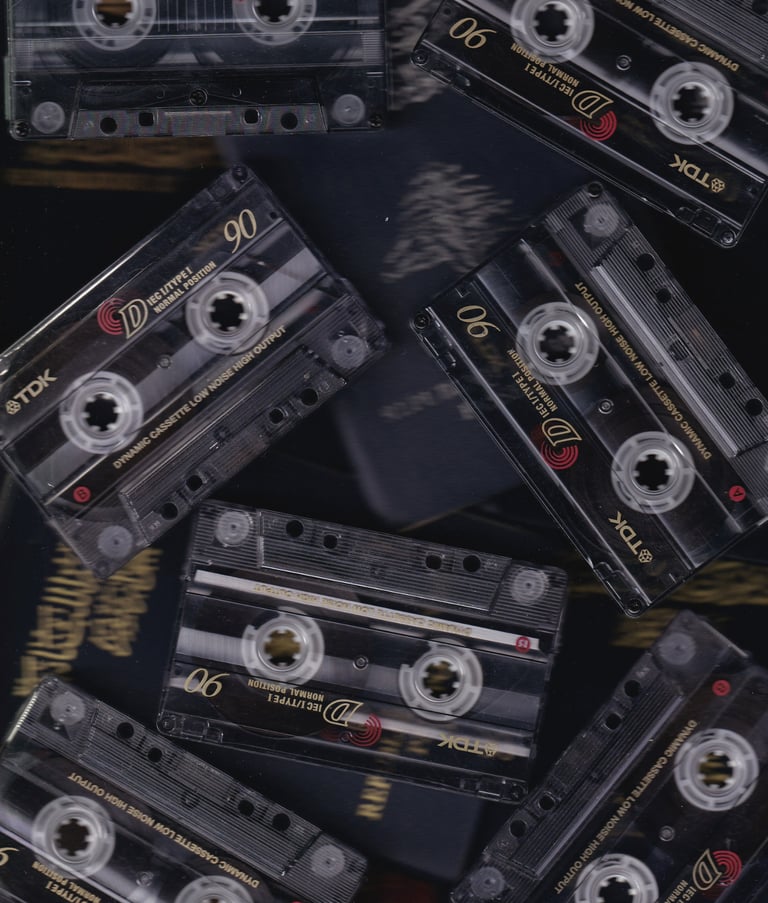

Environment and Storage
1. Keep them cool and dry. Store cassettes in a space where both temperature and humidity stay stable, avoid damp basements or hot attics.
2. Avoid big climate changes. Sudden shifts in heat or moisture can make the tape layers separate or warp.
3. Store upright. Keep cassettes standing on their edges, like books on a shelf, instead of stacked flat. This helps prevent the tape and casing from becoming misshapen.
4. Use good-quality boxes. Keep them in clean, archival-quality cases or boxes that protect against dust, light, insects and accidental knocks.
5. Keep away from hazards. Don’t store cassettes near magnets, heaters, windows, or strong chemicals, all of which can damage or erase the recordings.
Handling and Inspection
1. Handle with care. Hold the cassette by its outer shell only; never touch the exposed tape.
2. Check them regularly. Look for early signs of problems such as sticky or shedding tape, mould, warping or cracks in the casing.
3. Repair with caution. If a cassette shell is damaged, you can rehouse the tape into a new one, but do this carefully and only if you’re confident in the process.
4. Limit playback. Avoid unnecessary rewinding or playing old tapes, since each pass through a machine can increase wear